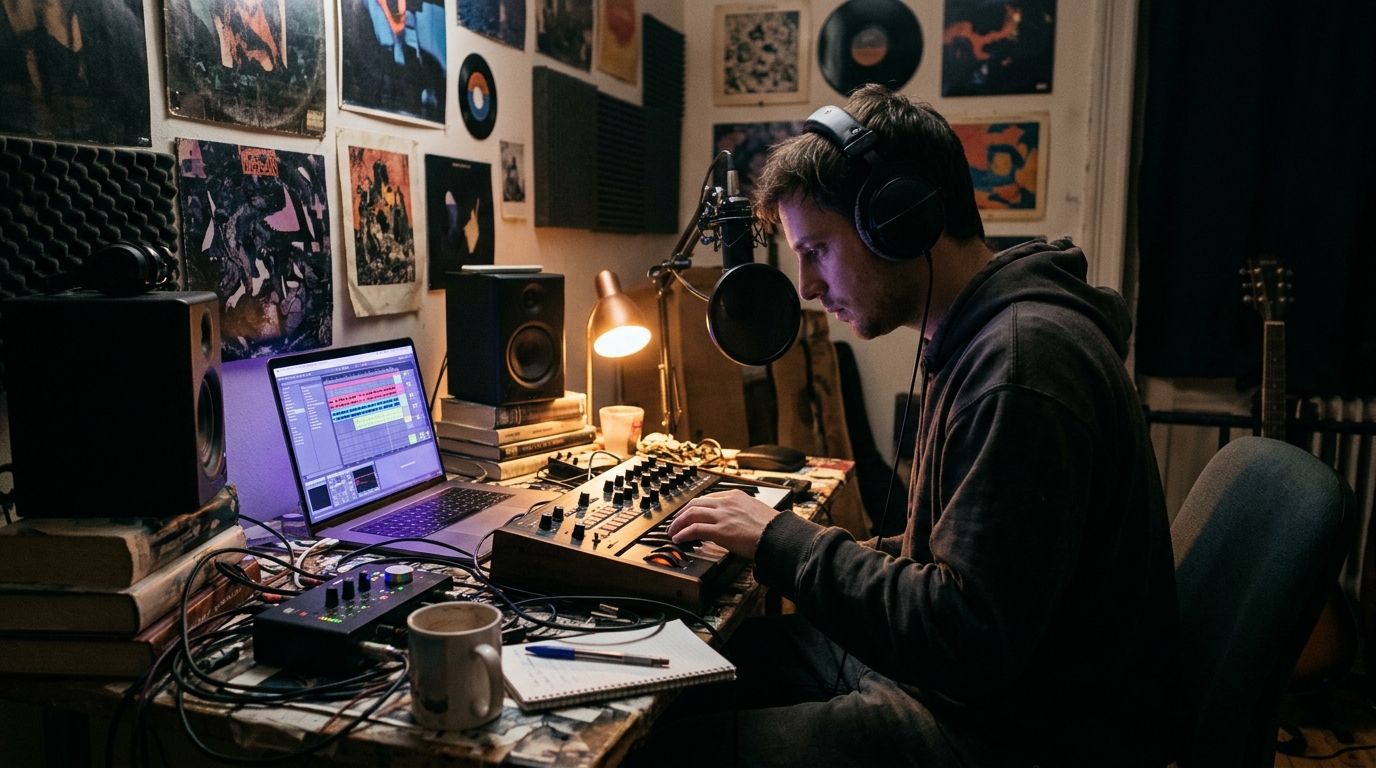
A 2026 report from Ditto Music surveyed 5,039 independent artists across 112 countries. Among its respondents, 74% reported earning less than $1,000 from music during the previous year. Meanwhile, 82% said they could not currently afford the costs of touring.
These figures are significant, although the survey should not be treated as a census of every musician worldwide. Its respondents represent a particular group of independent artists who chose to participate.
Nevertheless, the findings expose a central problem in contemporary music culture: visibility is easier to measure than sustainability.
For Infamouz, that raises a question worth asking beyond platform statistics. What does independence actually mean when making music also requires constant promotion, content production and financial risk?
Independent Music Economy 2026: More Access, Less Security?
The old barriers to releasing music have changed. Artists no longer necessarily need a traditional record-label contract to distribute recordings to international audiences.
However, easier distribution does not guarantee discovery, payment or a sustainable career.
What the 2026 Independent Music Report Reveals
Ditto Music’s research describes a creative population that remains ambitious despite significant financial challenges.
The results suggest that independence often transfers business responsibilities directly to musicians.
Why Music Income Remains Low for Many Artists
The report found that 74% of surveyed artists earned less than $1,000 from music during the previous year.
That figure includes musicians at different career stages. Some may be releasing their first recordings, while others have spent years developing an audience.
It would therefore be misleading to suggest that every respondent depends exclusively on music for income.
However, the figure does highlight how difficult earning substantial revenue can be.
Modern independent artists often pay for recording equipment, software, artwork, distribution, promotion and transportation.
They may also pay collaborators, engineers, designers and video editors.
Even when an artist generates revenue, those costs can consume a significant portion of it.
Gross music income is not the same as profit.
For example, an artist earning money from a small release may still operate at a loss after paying for production and advertising.
This creates a difficult situation: the artist appears active and successful online, but the project may not be financially sustainable.
The 2026 Independent Music Report provides the survey methodology and broader findings.
Streaming Popularity Does Not Equal Financial Stability
Streaming services offer a convenient way to reach listeners across borders.
However, a large number of plays does not automatically translate into a meaningful amount of personal income.
Streaming royalties depend on licensing agreements, rights ownership, listener activity and other factors.
Artists may receive payments through distributors, labels, publishers or collecting organizations.
Those arrangements can differ substantially between releases.
Ditto’s survey also found a difference between platforms that generate the most streams and those contributing the most royalty income.
Spotify was identified as the main source of streams by 51% of respondents, compared with 37% who named it their leading source of royalty income.
These are survey responses about leading platforms, not a calculation of universal per-stream rates.
Nevertheless, they illustrate why musicians should evaluate multiple revenue sources rather than relying on playback totals alone.
An artist’s audience may be growing while their actual earnings remain inconsistent.
The challenge is turning occasional listening into an ongoing relationship with people who value the work.
Social Video, Discovery and the Cost of Constant Promotion
Social media has become central to music discovery.
Short videos can introduce songs to listeners who might never encounter an artist through radio, magazines or local performances.
However, creating promotional content requires additional labor.
Why Artists Are Expected to Become Content Creators
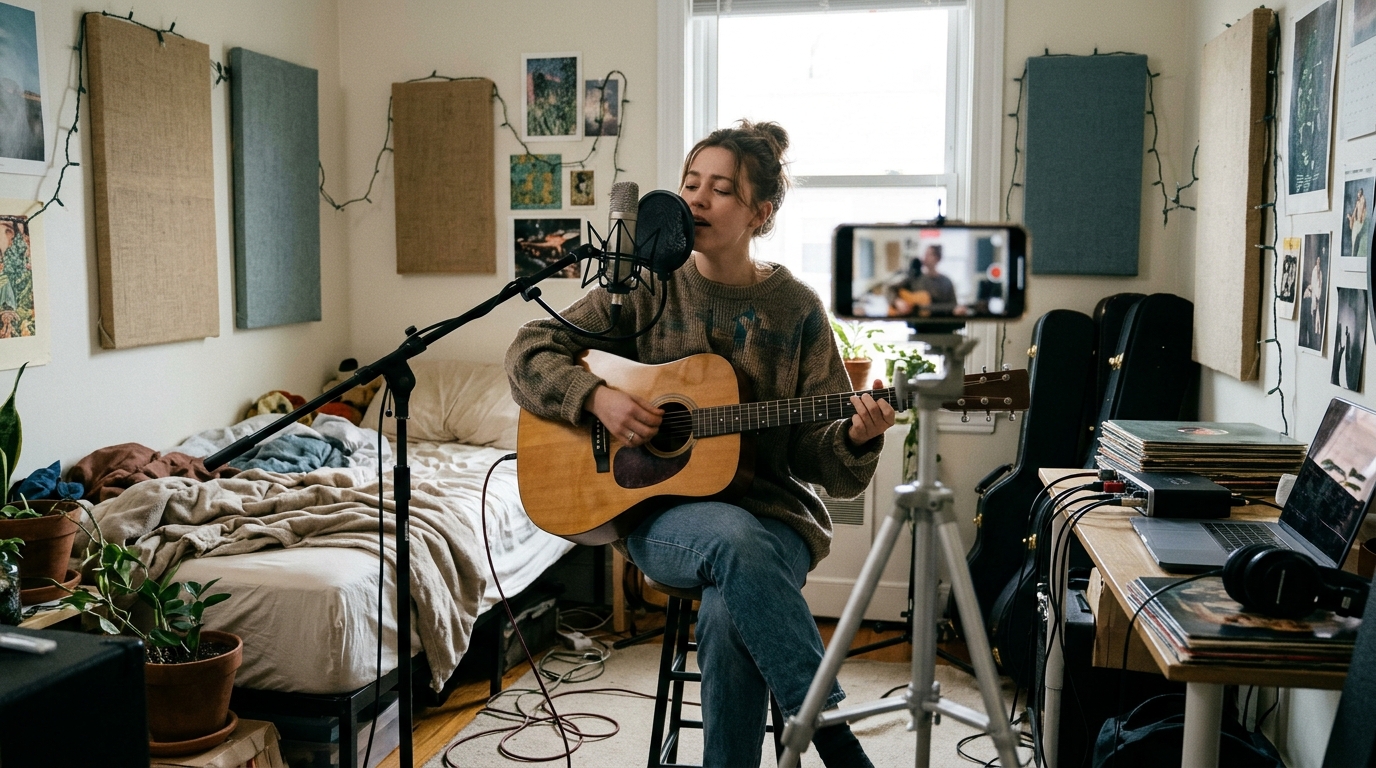
According to the 2026 Ditto survey, 67% of respondents identified social video platforms as their biggest source of new fans.
That finding helps explain why music promotion increasingly revolves around short, repeatable visual content.
A new artist might post rehearsal clips, studio footage, live performances, personal stories and short excerpts from unfinished songs.
Each video creates another opportunity to reach listeners.
However, the production process can also divert attention from writing, recording and practicing.
That trade-off is especially challenging when the musician operates without a dedicated marketing team.
One person may be responsible for songwriting, engineering, publishing, editing and audience communication.
Social platforms can make this workload appear effortless because the public sees the finished clip rather than the hours spent preparing it.
The pressure is not simply to release good music. It is to remain visible between releases.
Our essay on social media and creative flow explores how constant checking can interrupt focused work.
For musicians, this distinction matters. Promotional activity can support a creative career without becoming the entire creative practice.
When Online Attention Fails to Build a Real Audience
A viral video can generate impressive view counts without producing lasting interest in the artist behind it.
Some viewers remember a particular sound but never learn the musician’s name.
Others engage with a humorous clip without seeking the complete recording.
This does not mean short-form promotion is ineffective.
Instead, it shows why audience relationships matter more than individual viral moments.
Independent artists benefit when interested listeners have a clear next step.
That might involve visiting an official website, hearing a full release, subscribing to a mailing list or attending a local performance.
The goal is to build recognition beyond a single recommendation feed.
However, artists should avoid treating every listener as a potential customer.
Music communities develop through trust, shared interests and genuine cultural exchange.
An audience relationship becomes more meaningful when listeners return because they appreciate the work rather than because an algorithm repeatedly presents it.
How Independent Musicians Can Build More Sustainable Careers
There is no universal financial model for independent artists.
Different genres, locations, audiences and personal circumstances create different opportunities.
However, the 2026 data suggests several useful questions about sustainability.
Direct Support, Touring Economics and Creative Independence
One important strategy involves developing relationships that extend beyond streaming services.
Another involves understanding expenses before making commitments.
Build more than one source of music income.
Potential revenue streams may include recordings, merchandise, licensing, live performances, teaching and commissions.
However, not every option is suitable for every artist.
A musician whose work depends on a specialized niche audience may have different opportunities from a performer with a strong regional concert following.
The useful approach is to evaluate realistic demand and actual costs.
Use direct-to-fan platforms intentionally.
Bandcamp provides a way for listeners to purchase music and merchandise directly from participating artists and labels.
According to Bandcamp, an average of 82% of purchase revenue reaches artists or their labels, although individual arrangements vary.
That average should not be confused with the amount an individual musician ultimately keeps after recording, manufacturing and other costs.
Still, direct purchasing offers a different relationship from passive streaming.
Our coverage of Bandcamp Friday can be found through the Infamouz music archive.
Understand why touring is financially difficult.
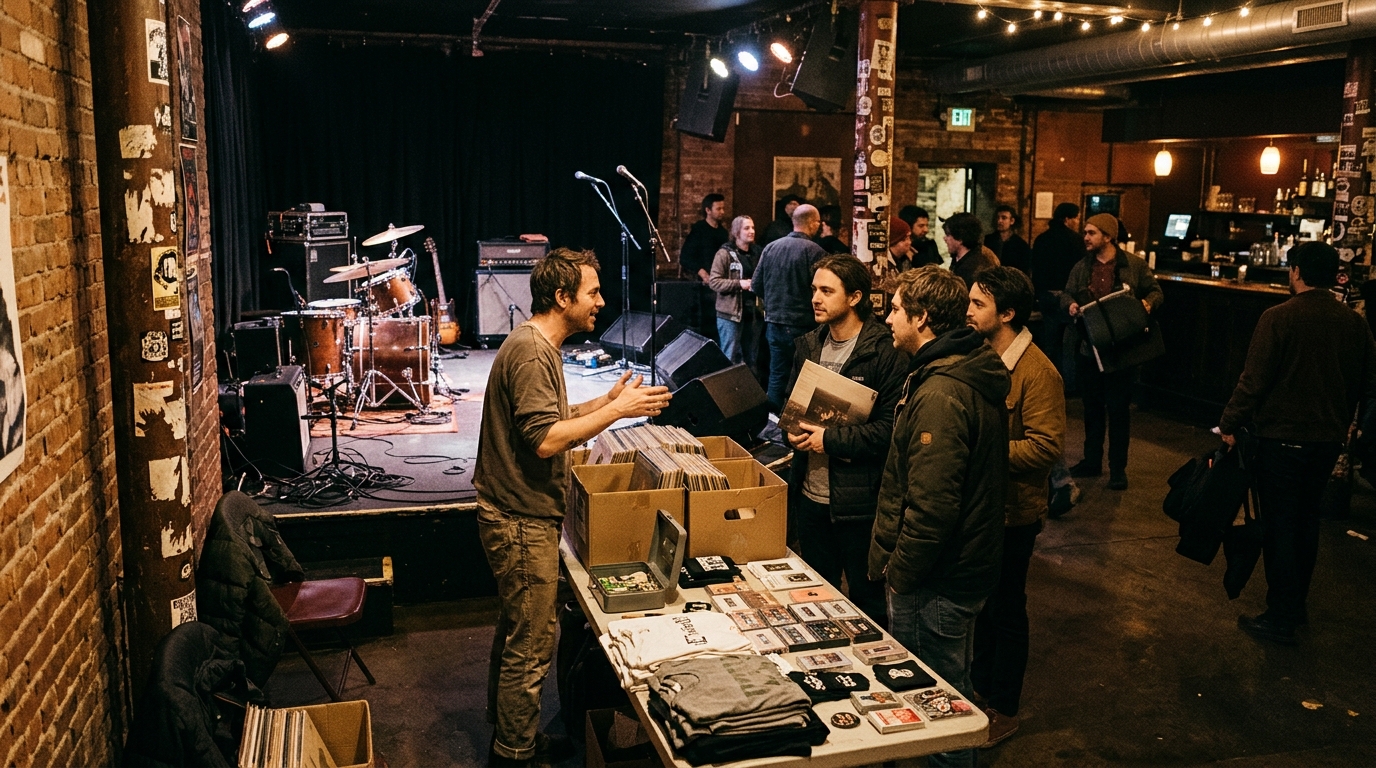
In Ditto’s survey, 82% of respondents said they could not afford touring expenses.
Travel, accommodation, vehicle rental, staffing and equipment costs may exceed the revenue from smaller performances.
Therefore, a tour that creates exposure might still produce a financial loss.
Artists should estimate expenses before confirming dates and avoid relying on uncertain ticket revenue.
Local performances, smaller regional runs and collaborative shows may offer different risk profiles.
However, even those approaches require planning and realistic expectations.
Keep creative ownership and business terms clear.
Independence does not necessarily mean controlling every right associated with a recording.
Collaborators may have agreements involving songwriting, master recordings, samples or publishing.
Artists should document those arrangements before a release becomes commercially valuable.
Written agreements can help reduce confusion about revenue sharing and permissions.
Legal advice may be appropriate for complex contracts.
Measure audience depth rather than only views.
Useful indicators may include repeat purchases, mailing-list subscriptions, attendance and genuine audience engagement.
However, no single metric captures the entire cultural value of a musician’s work.
Some important recordings reach only a small audience initially.
Others become influential years after release.
Independent culture should make room for projects that do not immediately perform well on commercial dashboards.
Protect time for making music.
Marketing needs boundaries because creative development requires sustained attention.
Artists can schedule promotional work separately from recording and rehearsal.
They can also establish modest, repeatable release routines rather than chasing every new content format.
These choices will not guarantee growth, but they may help preserve the reason the project began.
What about AI in independent music?
The same survey found that 47% of respondents reported already using AI somewhere in their music-making process.
However, that does not mean almost half are releasing fully AI-generated songs.
AI use can cover different activities, including administrative, technical and creative tasks.
Artists should consider questions of authorship, consent and transparency alongside productivity.
Infamouz’s discussions of AI voice replicas and independent culture provide further context.
Frequently asked questions
How much do independent musicians earn in 2026?
In Ditto’s survey, 74% of respondents reported earning less than $1,000 from music in the previous year. That does not represent every musician worldwide.
Are social videos important for discovery?
Yes. They were the leading new-fan source for many surveyed artists, although visibility does not guarantee income.
Is touring always profitable?
No. Transportation, accommodation, staffing and other expenses can exceed concert revenue.
Does independence mean artists own every recording?
Not necessarily. Ownership depends on contracts, collaborators and the relevant rights.
Final thoughts
The independent music economy in 2026 offers remarkable creative access alongside significant financial uncertainty.
Releasing music has become easier, but building a sustainable career remains difficult.
For artists, the most valuable strategy may be to build genuine listener relationships, understand costs and maintain ownership of the creative process where possible.
For audiences, supporting independent music means recognizing the labor behind what often appears online as effortless entertainment.
Editorial note: Survey figures reflect Ditto Music’s 2026 sample of 5,039 independent artists and should not be generalized to every musician.