
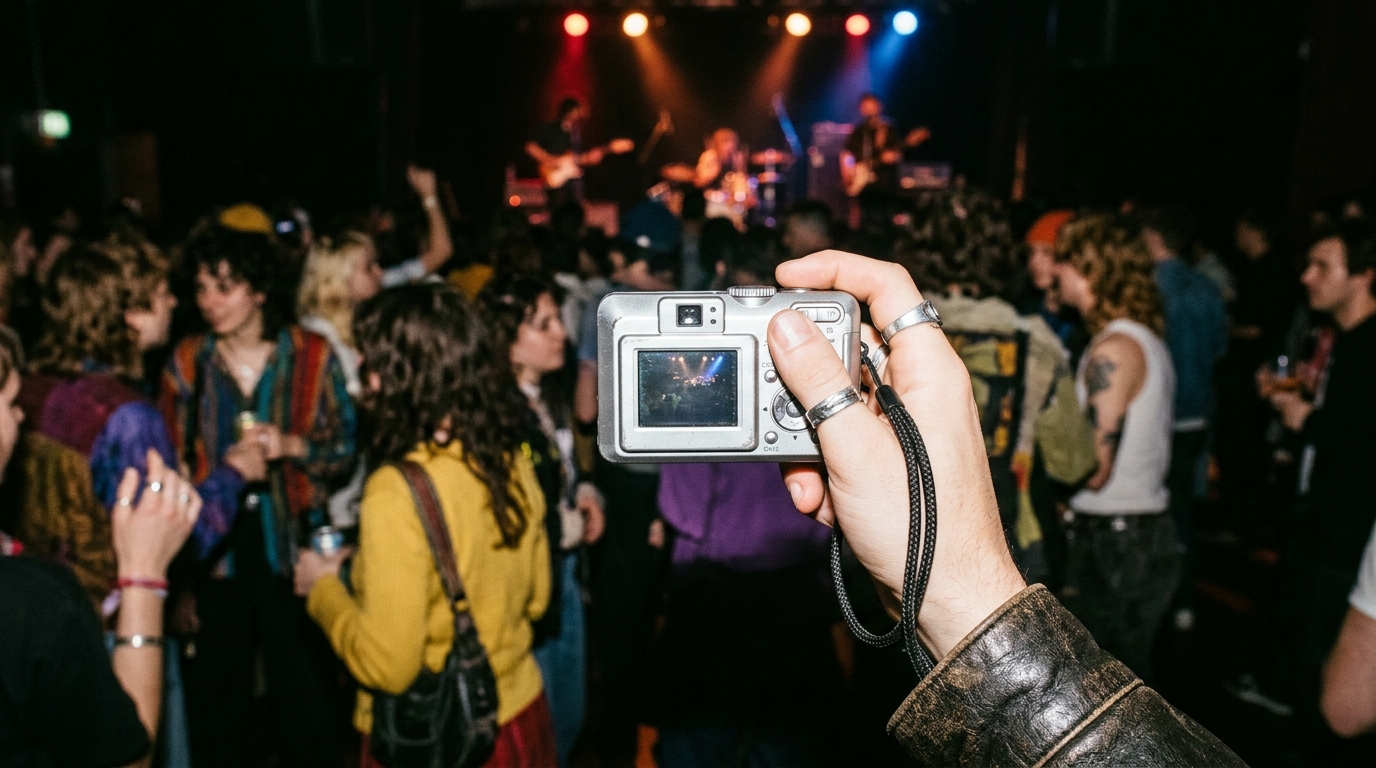
The digicam revival 2026 is more than a nostalgic filter. Compact digital cameras from the early 2000s and 2010s are returning to parties, concerts, street-style photographs and personal visual diaries. Their bright flash, slower operation and unpredictable image processing feel distinctly different from a phone camera that quietly sharpens, brightens and organizes almost every moment. The appeal is as much about how people photograph as how the finished picture looks.
But it would be simplistic to call every young photographer anti-technology. Many use old point-and-shoot cameras alongside smartphones, editing apps and social platforms. The digicam revival 2026 sits at an interesting crossroads: an appetite for imperfect pictures, a growing resale market and a desire to step away from the pressure to make every image immediately shareable. What follows is a guide to the aesthetic, the market and the practical limits of using older digital cameras today.
Why the Digicam Revival Is Still Growing
This trend has been visible for several years, but it has not simply disappeared with the next fashion cycle. A July 2026 Digital Camera World report noted continuing search interest in “digicam” and “digi cam,” with those terms reaching their highest search levels in a decade. Search activity is a useful signal of curiosity, although it does not tell us how many people use an old camera every week.
The Look: Direct Flash, Grain and Unpredictable Color
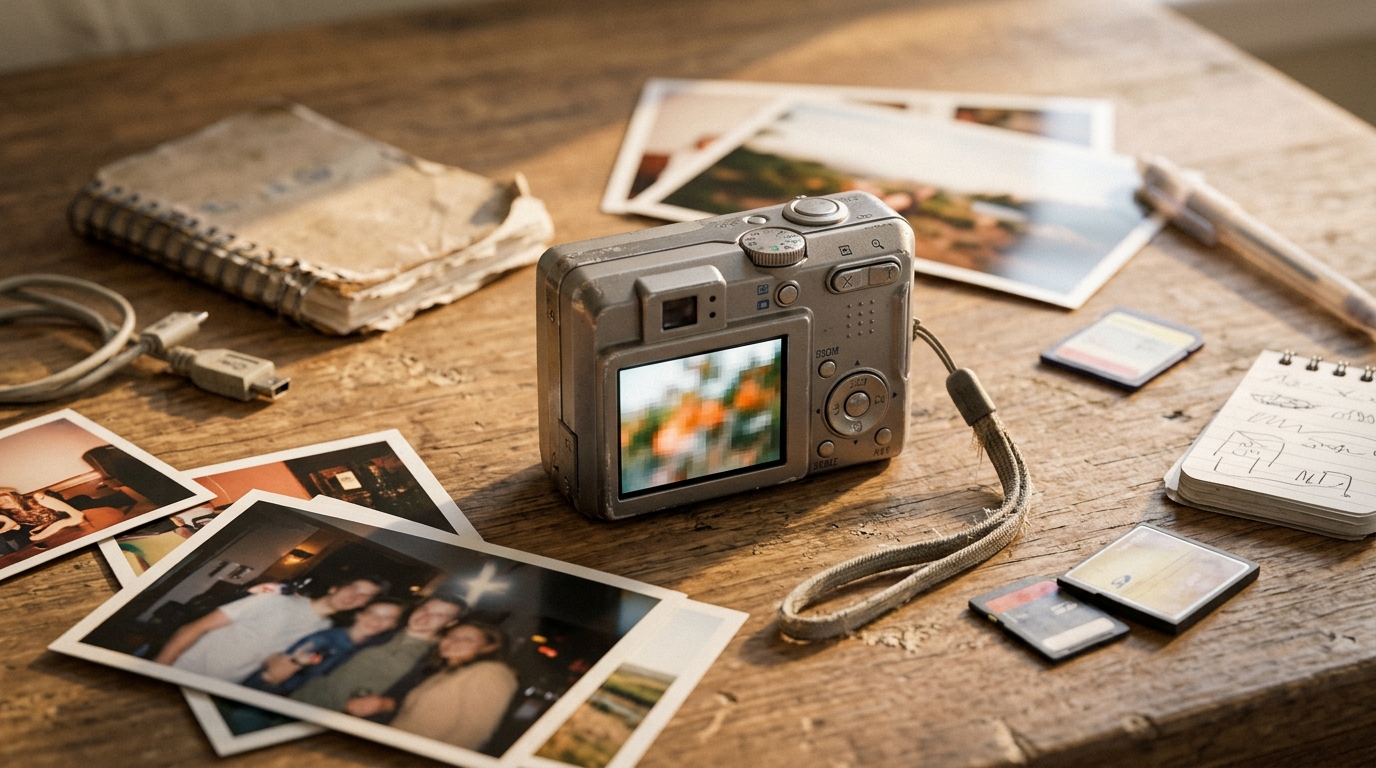
An older compact camera can produce strong highlights, deep shadows, unexpected white balance and visible digital noise. Some models flatten a nighttime party into a bright foreground and dark background. Others create warm indoor colors or slightly soft details that a modern smartphone might automatically correct. The results are not necessarily more accurate, but they can feel specific to a moment instead of processed toward a universal standard.
This is not proof that older sensors are superior. In low light, many early compacts struggle with focus and exposure. Batteries may last poorly, shutters can lag, and tiny screens make it difficult to check detail. The charm often arises from accepting those constraints rather than pretending they are advanced features. Like a handwritten zine, a digicam photograph can communicate presence through rough edges.
Why Imperfect Photographs Feel More Personal
Highly polished online pictures can start to resemble advertising even when they show ordinary life. By contrast, a flash-lit photograph of friends outside a small venue may look spontaneous because its lighting is awkward and its composition unplanned. That reading is subjective: a camera cannot guarantee sincerity. Still, choosing a tool that does less automatic correction can encourage photographers to accept results they might otherwise delete or retouch.
There is a historical dimension too. People remember family albums, early profile pages and photos sent between friends before every camera was linked to a feed. Infamouz has explored a related sense of ownership in why personal websites still matter. The shared thread is not that old technology was better; it is that people could make things without a single platform telling them what those things should look like.
What the Camera Market Actually Shows
The return of standalone cameras is not just an aesthetic observation. In its February 2026 market outlook, Japan’s Camera & Imaging Products Association reported roughly 2.44 million worldwide shipments of built-in-lens digital cameras during 2025, up 29.6% from 2024. The association projected around 2.77 million shipments of that category for 2026, an outlook rather than a final annual result.
Those totals include modern fixed-lens models, not just used Y2K digicams. They therefore cannot measure the vintage resale trend on their own. They do show that demand for dedicated cameras has room to grow alongside phone photography. A September 2026 report on a North American youth survey also found wide interest in retro technology, though its surveyed group included both Gen Z and younger millennials and multiple kinds of devices.
How to Start Shooting Without Overpaying
A sensible entry point is a working camera with a charger, compatible battery and a way to transfer photographs. The rarest model is not necessarily the best creative tool. A common secondhand compact with a functioning flash and controls can deliver much of the experience at a lower cost. Be cautious of listings built entirely around buzzwords such as “Y2K aesthetic” rather than a clear account of the camera’s working condition.
Before buying, ask for a fresh sample image and a short video showing the device powering on, zooming, firing its flash and saving to a memory card. Check the exact battery model, whether replacements are sold, and which memory-card formats are supported. Some older cameras use storage formats or connectors that need adapters. A cheap body becomes an expensive ornament if it cannot hold a charge or export files.
What the Camera Comeback Means for Visual Culture
A camera becomes culturally interesting when it changes people’s behavior. Someone carrying a separate device must decide to bring it, charge it and later move the photographs. That extra work creates a pause between seeing and sharing. It can make a night out feel less like continuous content production, although the same images may still end up on a social platform. The difference lies in the choices made along the way.
A Creative Workflow Beyond the Social Feed
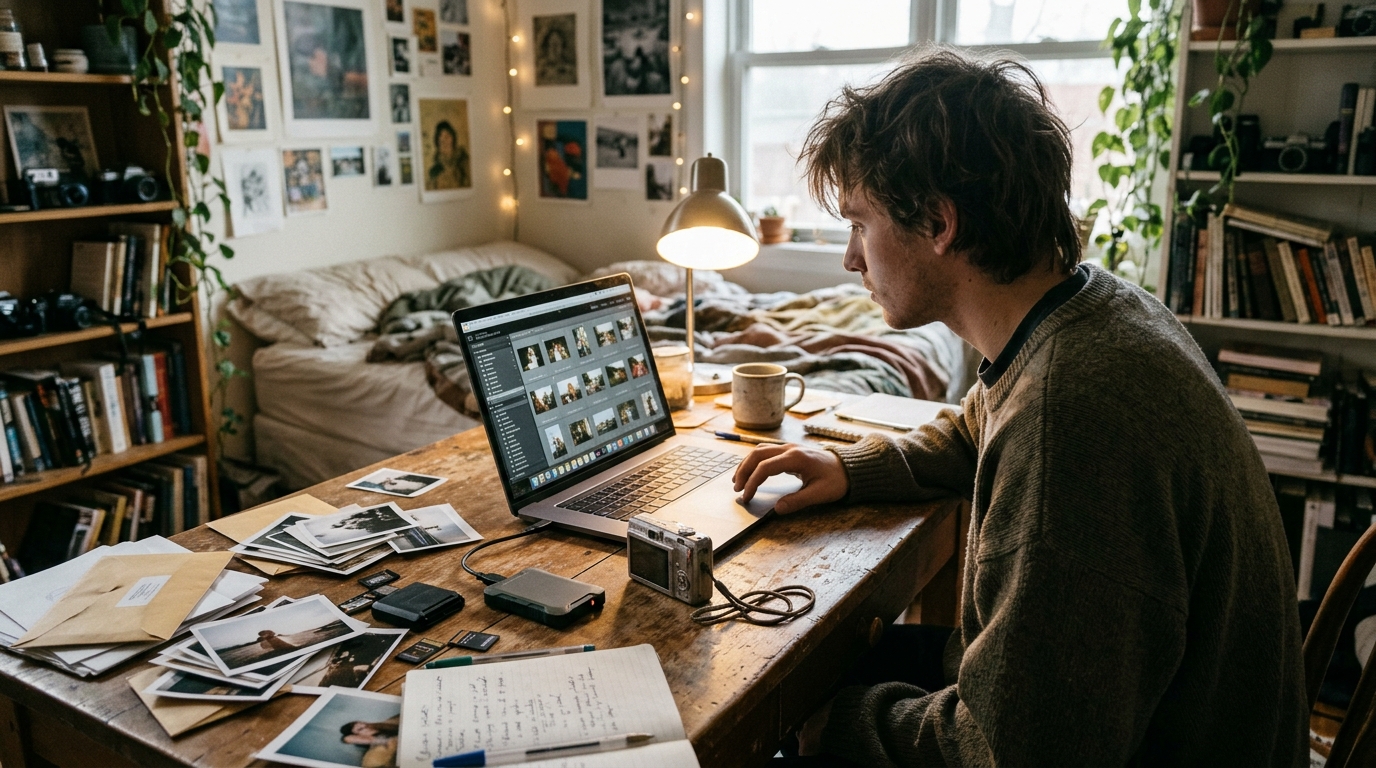
Try building a small photographic series rather than chasing a single viral frame. Choose one subject: hand-painted venue signs, nighttime bus stops, band merchandise tables or portraits of friends with consent. Shoot a limited number of frames and review them later on a computer. Keep the original files, add dates and locations to folder names, and select photographs for a simple gallery, printed zine or personal website.
That slower process mirrors Infamouz’s discussion of creative flow outside constant social scrolling. It gives a project time to develop before anyone has to react to it. A photograph can be a memory, an artistic experiment or a record of local culture without being judged only by its engagement numbers.
An Honest Checklist for Buying a Used Digicam
Inspect the lens for fungus, haze and scratches; test whether the battery compartment has corrosion; and check every button. Confirm that photos save and open, the clock works, and the card door closes properly. Avoid swollen or visibly damaged rechargeable batteries and use compatible chargers. Ask sellers whether accessories are original or replacements, and price in a spare battery or card reader before committing.
If the listing promises a particular “film look,” remember that results depend on exposure, lighting and the model’s processing. There is no universal vintage-camera setting. Photograph responsibly at live events, respect venue policies and obtain permission for intimate portraits. An imperfect aesthetic should never become an excuse to ignore the people whose lives appear in the frame.
Preserve the Images, Not Just the Aesthetic
Early digital photography has its own fragility. Proprietary cables disappear, memory cards fail and folders are easily lost during computer upgrades. After each session, copy files to a clearly named folder and keep a second copy on another drive or trusted backup service. Save the original image before applying edits. Simple records of date, photographer and subject make the work more useful years later.
The same preservation problem appears in other physical-media revivals. Our article on vinyl’s evolving cultural life looks beyond collecting to how materials and habits endure. Digicams similarly invite a question larger than nostalgia: what happens after the trend stops being fashionable? The best answer is to create work worth keeping and make sure its files survive.
The digicam revival 2026 is not a rejection of all new technology, nor is it a guarantee of better photography. It is a reminder that picture-making is shaped by the tools, delays and communities around it. A twenty-year-old point-and-shoot will not suit everyone, but for some photographers its limitations are precisely what makes shooting playful again. Choose a working camera, protect your files, value your subjects and let the final images become more than evidence that you participated in a trend.