
In July 2026, Deezer reported a threshold that would have sounded extreme only a few years earlier: fully AI-generated tracks had exceeded 50% of new daily uploads at peak, with roughly 90,000 synthetic tracks arriving each day on average during June. That figure describes Deezer’s incoming catalog, not the entire music industry, and it does not mean half of the music people actually play is artificial. Still, it marks a real change in scale. AI music is no longer a small experimental corner of digital culture. It is becoming an industrial supply problem, a rights problem, a discovery problem and, for independent artists, a credibility problem.
The useful question is not whether every AI-assisted song is automatically bad. Musicians have always adopted new tools, from drum machines and samplers to pitch correction and laptop production. The more urgent question is what happens when automated systems can generate and distribute music faster than listeners, platforms and rights organizations can evaluate it. For readers following the intersection of music and technology, this is where the Infamouz music desk and internet culture desk meet.
Why AI Music Crossed a New Threshold in 2026
The Upload Flood Is Bigger Than a Creative Trend
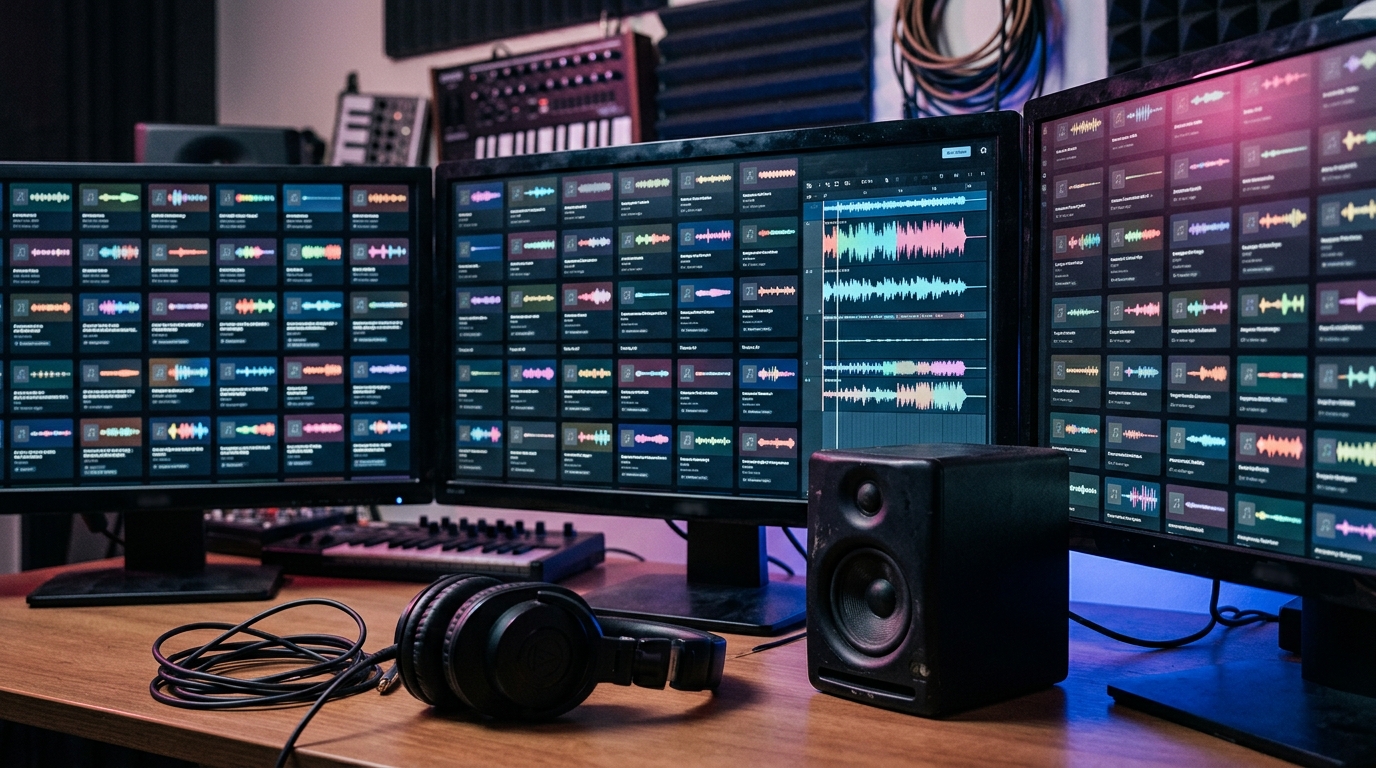
Generative music tools make it possible to produce a complete track from a short description, then repeat the process at enormous volume. A person can request different moods, arrangements or vocal styles without booking a studio or assembling a traditional production team. Used carefully, those tools may support demos, experiments, accessibility or rapid prototyping. Used as an automated publishing machine, however, they can turn streaming services into warehouses of near-infinite supply.
What Deezer’s Numbers Actually Show
According to Deezer’s July 2026 announcement, fully AI-generated tracks passed 50% of daily new uploads at peak in June. Deezer said it had already detected and tagged more than 13.4 million AI-generated tracks during 2025. The platform also stated that synthetic tracks were being excluded from algorithmic and editorial recommendations, while AI tracks connected to streaming fraud could be removed.
Those details matter because upload share and listening share are different measurements. A flood of tracks can dominate the intake pipeline without earning meaningful human attention. Some may never be played. Others may exist mainly to capture tiny royalty payments through automated or manipulated streams. The headline is therefore not “listeners prefer AI music.” The more accurate interpretation is that generation has become so cheap and fast that supply can grow independently of demand.
Why Streaming Fraud Changes the Conversation
Streaming fraud is not unique to artificial intelligence. Fake accounts, looped playback, compromised credentials and coordinated click farms existed before text-to-music systems became widely available. Generative tools change the economics because they can create a huge catalog quickly, giving fraudulent operators more material to distribute across disposable artist identities. Even if each track earns very little, a sufficiently large automated network can attempt to collect revenue at scale.
This creates collateral damage for legitimate musicians. Royalty pools are finite, platform moderation costs increase, and listeners become more suspicious of unfamiliar releases. Independent artists already struggle to prove that a profile, song, voice and audience are real. A synthetic flood can make discovery feel less adventurous because every unknown track carries a new question: is this a person developing a sound, or a disposable file created to occupy catalog space?
The problem also reaches beyond royalty fraud. Catalog overload affects search results, metadata quality, recommendation training and the basic visibility of small releases. A human artist may spend months developing a record only to launch beside thousands of automated uploads created that morning. That does not make the human release better by default, but it creates an attention imbalance that platforms cannot solve by offering more storage alone.
Detection and Labeling Are Becoming Part of Listening
Deezer’s response points toward a future in which music services do more than identify genre, explicit lyrics or release date. They may also disclose whether a track is fully synthetic, partly AI-assisted or associated with suspicious behavior. Clear labeling can help listeners make informed choices, but detection is not perfect. Tools evolve, production workflows mix human and machine elements, and a binary label may hide more than it reveals.
A Label Is Not a Quality Verdict
An AI label should describe process, not pretend to settle artistic value. A musician might use a model to generate a texture, then rewrite, perform, edit and arrange the result into a deeply personal work. Another uploader might accept the first output, attach generic artwork and publish hundreds of tracks. Calling both releases “AI music” collapses two very different levels of human contribution.
The U.S. Copyright Office has drawn a similar distinction in its guidance on copyrightability. Its current position is that generative AI output can receive copyright protection only where a human author has contributed sufficient expressive elements. Human-created selection, arrangement or modification may qualify, while merely entering prompts generally does not. The Office’s Copyright and Artificial Intelligence reports are useful primary sources, but they are not a substitute for legal advice about a particular recording, composition or release agreement.
For criticism and music journalism, process should become part of the review. Writers can ask who composed the melody, who wrote the lyrics, who performed the voice, which tools were used, whether training or source material was licensed, and how much editorial control a human exercised. Infamouz should apply the same transparency rules described in its editorial standards rather than treating “AI” as either a magic badge or an automatic insult.
What Independent Artists and Listeners Can Do Now
Protect the Human Work Behind the Release
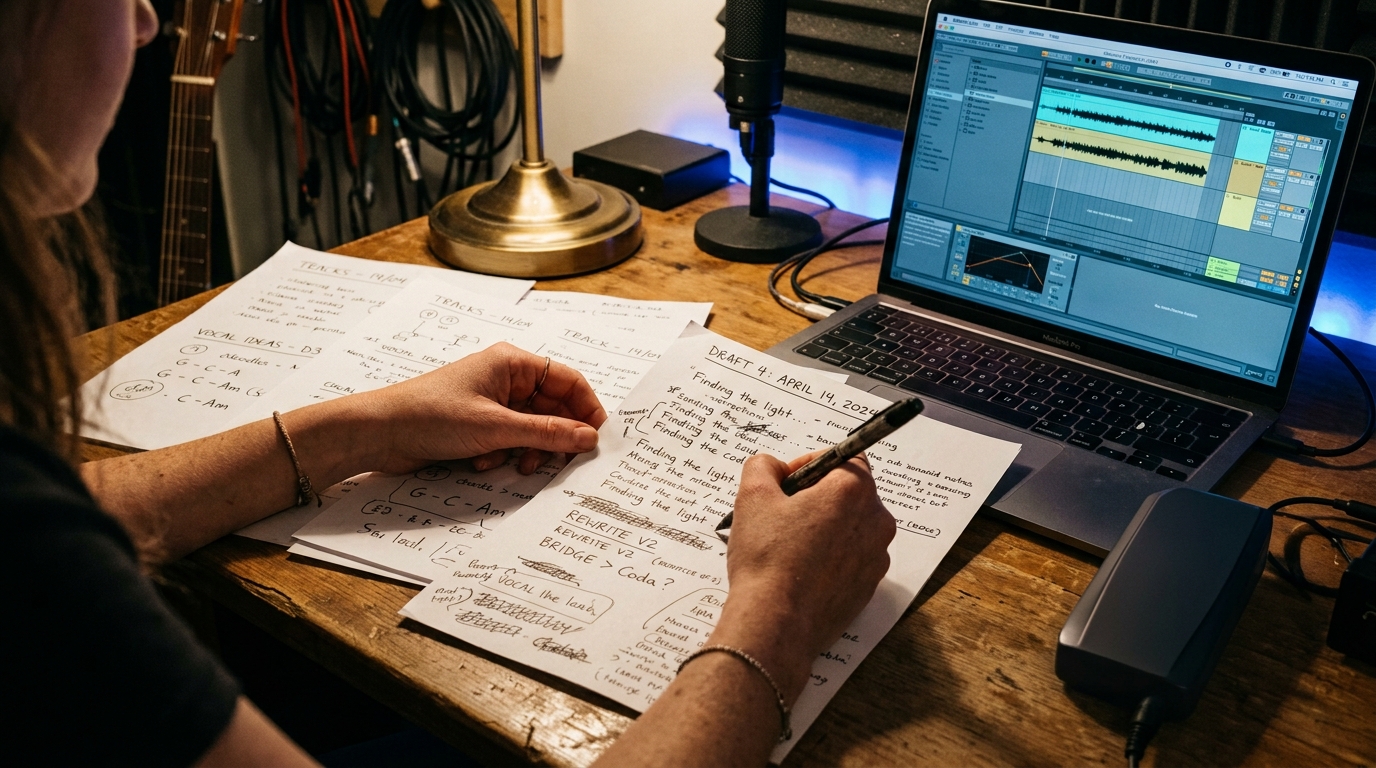
Independent artists do not need to reject every new tool, but they do need stronger documentation. Save dated project files, lyric drafts, voice notes, stems, session exports, agreements and contributor credits. When AI is used, record the tool, date, purpose and the parts of the final work that were generated or transformed. This paper trail can help with copyright registration, distributor questions, collaborator disputes and public transparency.
Document Authorship, Credits and Tool Use
Credits should become more specific, not less. Instead of writing “produced with AI,” identify the human roles that shaped the release: songwriting, arrangement, performance, editing, mixing, mastering and final selection. Do not imitate a living artist’s voice or identity without permission. Do not assume a platform’s terms guarantee that every output is safe to commercialize. Tool policies, training disclosures and licensing conditions can change, so artists should verify the current rules before release.
Listeners also have agency. Follow artists through official websites, mailing lists, verified profiles and direct-sale platforms. Read credits when they are available. Support releases that show a real creative process, whether or not software assisted that process. Avoid turning the debate into a purity test, because modern recording is already built from layers of technology. The stronger standard is accountability: can the creator explain what they made, what the machine contributed and what rights they hold?
Platforms should make that accountability easier. Useful disclosures would distinguish fully generated tracks from works that use limited assistive tools. Recommendation systems should not quietly push synthetic catalogs simply because they are inexpensive or abundant. Fraud enforcement should focus on manipulation rather than punishing artists for experimentation. Most importantly, royalty systems should not reward bulk uploading at the expense of genuine listening.
The 2026 AI-music threshold is not proof that human music is disappearing. It is proof that digital abundance has reached a level where volume tells us almost nothing about cultural value. A machine can produce more files than any listener can hear, but it cannot automatically create a scene, a memory, a live relationship or a reason for people to care. Those things still come from context and human attention.
For Infamouz, that makes AI music an ongoing cultural story rather than a one-time technology scare. Future coverage can examine creator contracts, synthetic voices, platform labels, independent release strategies and the return of physical formats. Readers can continue through the essays desk for criticism and the archive for earlier moments when new technology changed how music was made, owned and trusted.